Consulting the ledger...

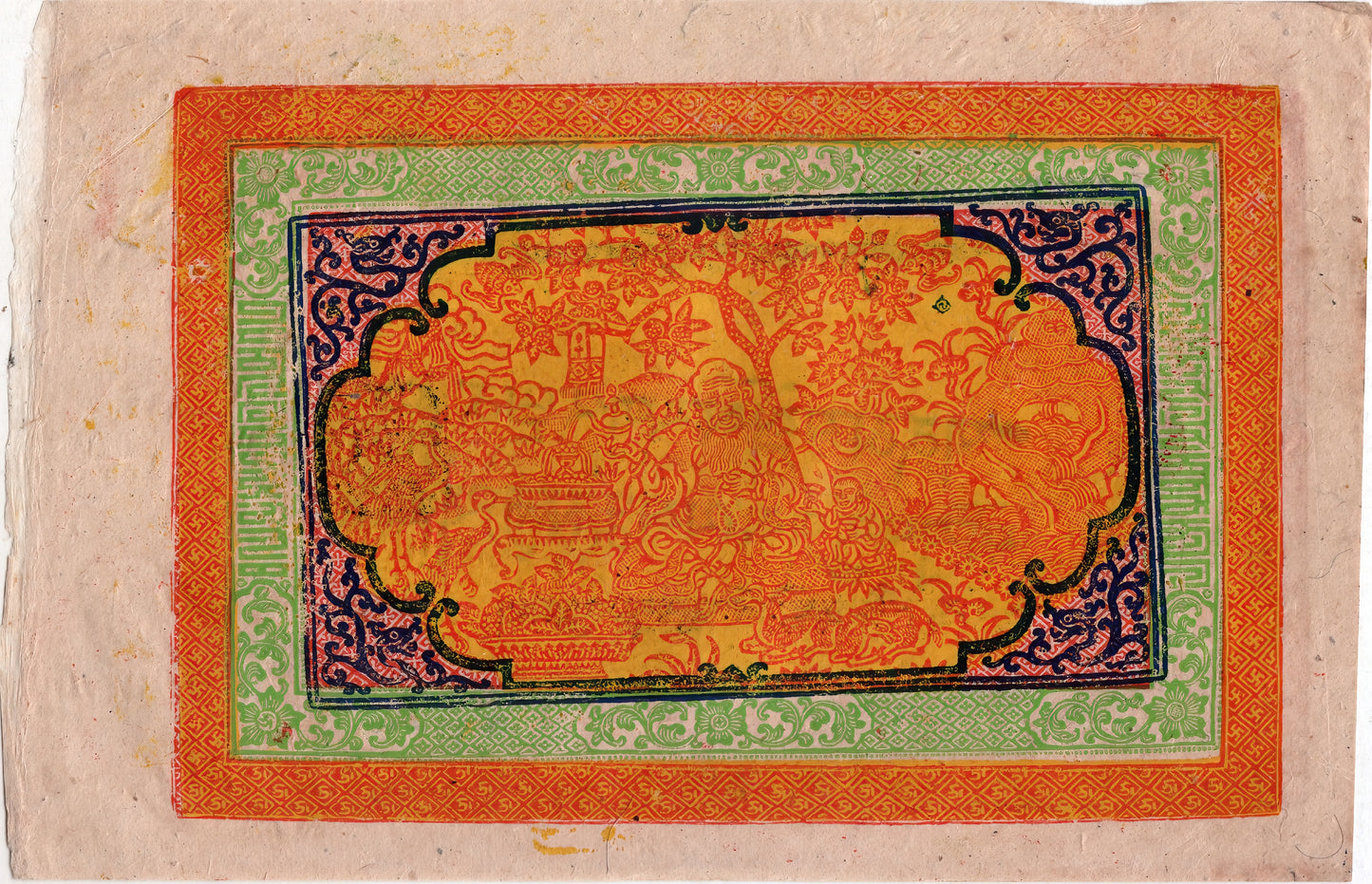
Tibet 100 Srang Banknote – Multicolour Woodblock Print – UNC – Early 20th Century
Tibet 100 Srang Banknote – Multicolour Woodblock Print – UNC – Early 20th Century
Regular price
$399.00 USD
Regular price
Sale price
$399.00 USD
Shipping calculated at checkout.
Object Title:
Banknote, 100 Srang — Tibet, Early 20th Century
Catalogue Note
This exceptionally preserved 100 Srang banknote represents one of the final monetary issues of pre-modern Tibet. Produced using a centuries-old woodblock printing tradition, each element — the paper, pigments, impressions, and seals — reflects the artistic and administrative culture of the Tibetan government prior to the mid-20th century reforms.
The note is printed on hand-crafted Himalayan paper, made from the inner bark of local plants such as Daphne bholua and Edgeworthia gardneri. This material, prized for its durability and texture, was traditionally prepared in small workshops attached to monasteries and state printing offices.
The design features the revered Snow Lions, guardians of the Tibetan highlands and emblematic of the union of spiritual and temporal power. Their presence signals both protection and legitimacy. Additional motifs include auspicious Buddhist symbols, inked border patterns, and the official red seals of the Tibetan authority.
Woodblock printing ensured that every impression was applied manually — layer by layer — resulting in natural variations in colour density, registration, and relief. These variations, combined with the fragile handmade paper, make surviving UNC (Uncirculated) examples exceptionally rare.
Physical Description
Medium: Multicolour woodblock print on handmade Tibetan paper
Dimensions: Standard 100 Srang format
Condition: UNC — crisp fibres, unhandled, full margins, no folds
Provenance: Issued under the Tibetan government administration, early 20th century
Significance
Tibetan woodblock banknotes occupy a unique position in world numismatics: they are not merely monetary instruments, but expressions of a cultural, religious, and artistic legacy. The 100 Srang is widely regarded as one of the most visually striking examples of Himalayan paper money, blending craft, symbolism, and state authority.
In European collections, comparable specimens are held by:
The British Museum, London
The Ethnographic Museum, Zurich
The Musée Guimet, Paris
The Leiden Ethnology Collection, Netherlands
This note stands as a rare opportunity to acquire a piece of Tibetan history in a level of preservation seldom encountered outside institutional holdings.
Share

Authenticity Guaranteed
Verified Curios & Artifacts
Global Secure Shipping
Tracked & Insured Delivery
Have a Question?
Speak to a Curator
View Your Treasures
Proceed to Cart